Native applications / Apple platforms
Private AI, from pocket to desktop.
I’ve built apps for iPhone, iPad and MacBook, including on-device MLX functionality and MLX models running on my MacBook.
PlatformsiPhone · iPad · MacBook
Application engineeringNative Apple apps
AI architectureOn-device and private-server workflows
See the app. See the workflow.
A three-minute ModelDeck walkthrough, from the native interface to AI workflows. The demo shows the product experience; local and connected capabilities are explained on the Apple apps page.
ModelDeck: a native AI interface
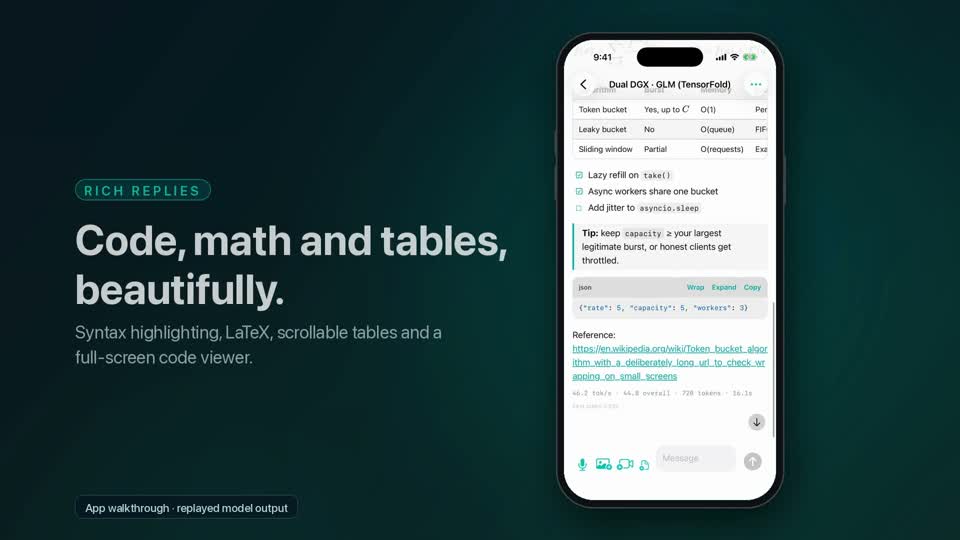
ModelDeck is a SwiftUI iPhone/iPad application for chat and private model management. It brings on-device models and remote model services into one application, while distinguishing where a workload runs.
On-device MLX on iPhone
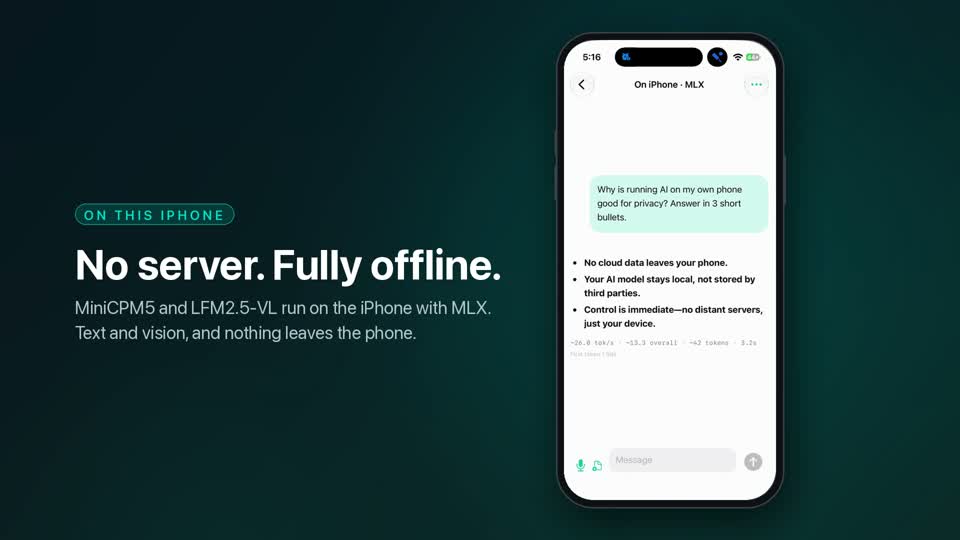
The implementation integrates MLX language and vision models, model downloads and imports, and local speech workflows. Memory-aware admission checks, a bounded buffer cache, idle unloading and background handling are part of the model lifecycle.
I’ve tested text and vision generation and the local speech pipeline on a physical iPhone. Model choice depends on the device’s memory and the workload.
iPad and MacBook applications
I’ve also built apps for iPad and MacBook, and I run MLX models on my MacBook. My work covers the native interface, model runtime and the complete user workflow.
Local inference and connected infrastructure
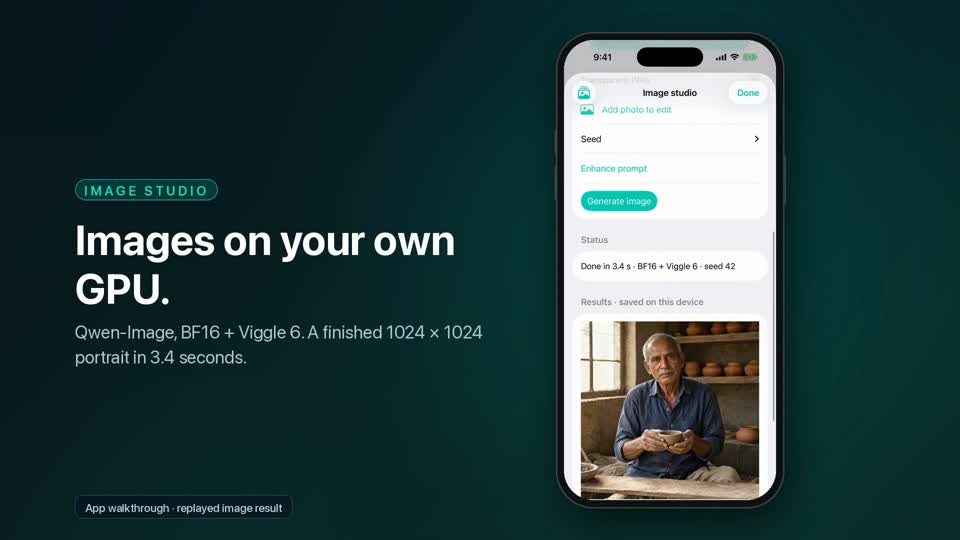
On-device inference runs a compatible model on the Apple device. Connected workflows call a model server on another machine. ModelDeck supports private infrastructure connections and includes native image and video forms backed by remote generation services; those media services should not be confused with on-phone generation.
What this enables for a client
- A native interface designed around a useful AI task.
- On-device inference where model size and device resources fit.
- Private-server inference when the workload needs more compute.
- Explicit data routing, model lifecycle controls and device-specific evaluation.